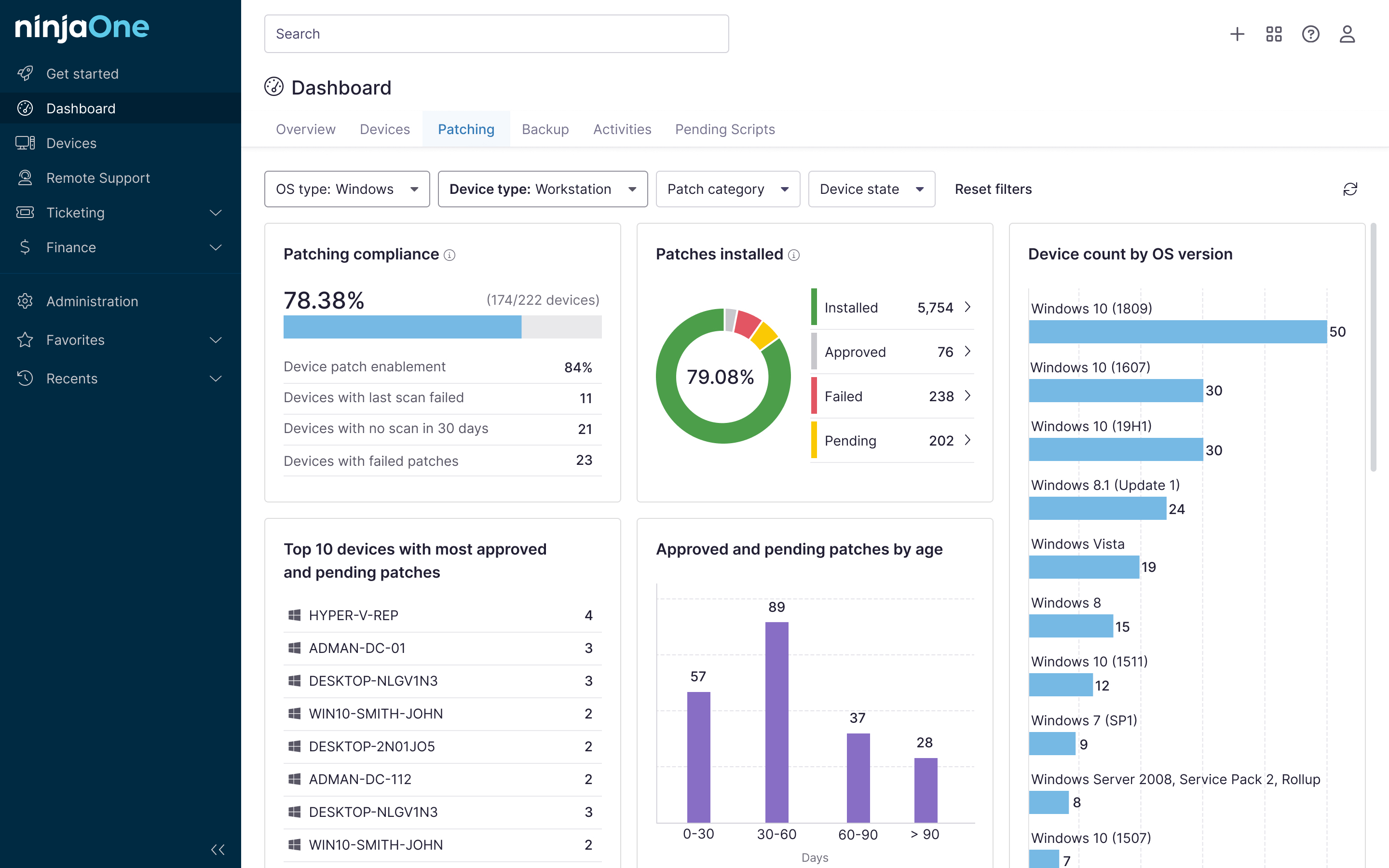
Managed service providers (MSPs) often deliver lengthy reports to their clients packed with raw data and jargon. Although accurate, these reports are too technical, which may confuse business leaders and lead to failure. In turn, MSPs miss the chance to show the actual business value of IT.
By simplifying reporting and focusing on results and outcomes, MSPs can build trust with executives and strengthen upsell and renewal discussions. This approach makes IT a business enabler instead of an added cost. This guide shows you how to communicate MSP metrics and return on investment (ROI) without overwhelming clients with technical jargon.
How can your MSP present the business value of IT without being too technical?
MSPs can show value by focusing on outcomes that matter to business leaders rather than giving too much technical detail. To achieve this, plain language reporting that highlights results, reduces risk, and connects IT performance to business goals is necessary.
📌 Prerequisites:
- You’ll need access to operational data, such as service-level agreement (SLA) adherence, patching rates, ticket volumes, and downtime metrics.
- You must agree with your team about the client’s top priorities, such as compliance, risk reduction, uptime, or productivity.
- For this to succeed, you must have a reporting template on PowerPoint, Canva, or Excel.
- You’ll need a regular schedule, such as monthly or quarterly, to present these reports.
Step 1: Identify business-relevant metrics
Not all MSP metrics matter to business owners. To show value, you must focus on MSP success metrics and key performance indicators (KPIs) that connect to business priorities.
📌 Use Cases:
- This step ensures reports highlight the business value of IT instead of its technical ability.
- It helps executives see how IT supports uptime, productivity, and risk reduction.
- It gives you a consistent set of metrics in every client conversation.
📌 Prerequisites:
- You will need access to accurate operational data such as uptime, ticket resolution rates, patch management, and backup status.
- This step needs an understanding of which business outcomes the client values most, like compliance, availability, or cost control.
- You will need a simple format you can go back to.
Here are the KPIs that matter to business stakeholders, along with why they matter:
| KPI | Why it matters to stakeholders |
| Uptime percentage and downtime avoided | Demonstrates system reliability and shows how IT keeps employees productive |
| Tickets resolved within SLA vs breaches | Proves service quality and responsiveness, directly impacting client satisfaction |
| Patches applied and vulnerabilities remediated | Reduces security risk and helps maintain compliance |
| Backup success rates and recovery readiness | Ensures business continuity and protects against data loss or ransomware |
Deliverable: A KPI roster aligned to client outcomes
Step 2: Translate technical data into business outcomes
Raw numbers and technical outcomes don’t mean much to executives unless accompanied by or translated into client-facing business translations. You can convert the data into understandable narratives, clarifying how IT supports business goals.
📌 Use Cases:
- This step connects IT work to measurable business results that executives understand.
- It builds credibility by showing how technical activity reduces risk, improves productivity, or supports compliance.
📌 Prerequisites:
- This step needs reliable technical metrics from your RMM, PSA, or reporting tools.
- You should know the client’s top priorities and have a glossary or template to standardize how metrics are translated into outcomes.
Here are examples of metrics and their plain-language narratives:
| Technical Metric | Business Translation |
| 99.9% uptime | Your staff had three fewer hours of downtime this quarter. |
| 5000 patches applied | Reduced ransomware exposure and compliance risk |
| 90% of tickets closed within SLA | Minimized disruptions to business operations |
Deliverable: You’ll obtain a glossary of business translations for standard IT metrics.
Step 3: Use layered reporting structures
A layered reporting approach, or presenting the same information at different levels of detail depending on the audience, is necessary when highlighting MSP metrics.
📌 Use Cases:
- This step prevents overwhelming executives with data while keeping technical teams informed.
- It enables MSP teams to balance clarity with transparency by tailoring information to each audience.
📌 Prerequisites:
- This step requires a template that can help to present metrics and narratives on multiple levels.
- You will need to know the audience of each layer, like business executives and IT staff.
Here’s how to present MSP success metrics and KPIs at different levels.
| Layer | Purpose |
| Executive summary | A one-page overview highlighting business outcomes and ROI |
| Dashboard | Simple visuals that showcase KPIs and trends |
| Appendix | Detailed technical data available for IT staff if needed |
Step 4: Visualize, do not overwhelm
Charts and visuals make information easier to digest than raw text and data. They will help you get your point across, highlighting key insights without confusing the audience.
📌 Use Cases:
- This step helps clients quickly understand MSP performance metrics and trends without being buried in data.
- It draws attention to significant wins and incidents that were avoided.
- This creates a more engaging way to present the business value of IT during QBRs or review meetings.
📌 Prerequisites:
- You’ll need access to accurate, up-to-date KPI data that can be turned into visuals.
- You must use a simple reporting tool that supports pie charts, bar charts, and trendlines.
- This step requires clear criteria for deciding which metrics are the most important to show.
Here are tips to help you visualize data without overwhelming clients:
- Use simple charts instead of raw tables, text, and data.
- Limit reports to 3-5 key visuals per meeting.
- Add short call-outs that emphasize and explain major successes and underscore avoided incidents.
Deliverable: You’ll have a client-facing dashboard that can be understood at first glance.
Step 5: Incorporate reports into strategic conversations
Reports aren’t just a showcase of what you’ve done. Use them as tools to demonstrate ROI, strengthen renewals, and show how IT supports business priorities.
📌 Use Cases:
- This step turns reporting into a business conversation.
- It helps MSPs justify pricing, service tiers, and contract renewals.
Here’s how to incorporate reports into strategic conversations:
- Position reports as proof of ROI, not just documentation.
- Reports can support renewal readiness packages, MSP pricing justification, or service tier updates.
- You can use it to emphasize how IT outcomes align with business priorities and reduce risk.
Deliverable: Reports embedded into QBRs and renewal decks as value reinforcement tools
💡 Tip: Plain-language reports can highlight your capabilities. You can include your results in your MSP marketing plan.
⚠️ Things to look out for
| Risks | Potential Consequences | Reversals |
| Overloading reports with data | Clients may lose focus and miss key outcomes. | Limit to a few business-relevant KPIs and visuals. |
| Using technical jargon | Executives could fail to see the business value of IT. | Translate metrics into plain language narratives. |
| Skipping business context | Reports might be seen as documentation only. | Link every metric to ROI, risk reduction, or business priorities. |
Best practices for demonstrating MSP value without overwhelming clients
The best reporting practices focus on clarity, linking MSP metrics to business outcomes, and consistency. The table below highlights the elements that make reports effective and the value they deliver.
| Component | Purpose and value |
| Business-relevant KPIs | Focus on what clients care about (business outcomes) |
| Plain-language translation | Bridges technical and executive language |
| Layered reports | Serves both executives and technical staff |
| Visual dashboards | Makes data accessible and actionable |
| Strategic integration | Links reporting directly to renewals and upsells |
Automation touchpoint example for client-facing reports
This lightweight export helps you summarize tickets without drowning clients in detail. You can use the PowerShell script below to make a simple status breakdown that you can then chart in reports.
Import-Csv "Tickets.csv" | Group-Object Status |
ForEach-Object {
[PSCustomObject]@{
Status = $_.Name
Count = ($_.Group | Measure-Object).Count
}
} | Export-Csv "Ticket_Summary.csv" -NoTypeInformation
This script reads a CSV (spreadsheet file called Tickets.CSV, which you can export from your PSA or create manually. It should include a status column with values like “Open”, “Closed”, or “In Progress.”
This essentially groups tickets by status, counts how many fall into each category, and exports the summary to a new file called Ticket_Summary.CSV. You can use the new file for quick charts or snapshots for client reports.
Quick-Start Guide
Key Insights from NinjaOne’s Approach
The article focuses on helping MSPs show business value through transparent reporting by:
– Focusing on outcomes rather than just technical details
– Simplifying metrics and data presentation
– Using business-oriented KPIs that clients care about
General Best Practices for MSP Value Demonstration
Here are some universally applicable strategies that align with NinjaOne’s approach:
1. Outcome-Focused Reporting
– Shift from technical metrics to business outcomes
– Highlight how your services impact key business objectives
– Use metrics like uptime, cost savings, and productivity improvements
2. Simplified Dashboards
– Create visual dashboards with clear, at-a-glance insights
– Use color-coding and simple charts instead of complex tables
– Limit reports to 5-7 key metrics per client
3. Client-Centric Communication
– Tailor reports to each client’s specific business goals
– Use plain language instead of technical jargon
– Schedule brief review meetings rather than sending lengthy reports
4. Proactive Value Demonstration
– Implement automated reporting that highlights value before issues arise
– Use before-and-after comparisons to show improvements
– Include client testimonials and case studies
Demonstrating MSP value with clear reporting
Demonstrating MSP value should be all about clarity, not complexity. By choosing business-relevant KPIs, translating them into outcomes executives understand, and presenting them in layered, visual formats, MSPs can reinforce their role as strategic partners without overwhelming clients with technical reports. In turn, this supports strong client relationships and effectively enables them to communicate the business value of IT.
Related topics: