Have you ever upgraded from Windows 10 to 11 only to encounter more bugs and even slower startup times? Don’t worry; you can roll back to Windows 10 within 10 days.
Once you’ve upgraded to Windows 11, your computer keeps a copy of the previous Windows version in the Windows.old folder you can use to roll back to Windows 10. However, the file will only be available for up to 10 days. Afterwards, your system will automatically delete it.
The good news is that there are methods for extending the Windows 11 rollback period to a maximum of 60 days.
How to extend the rollback period after upgrading to Windows 11
📌 Prerequisites:
- Administrative Privileges: You need administrative rights to extend the rollback period for a previous Windows version.
- Windows.old Folder: You need to have the Windows.old folder on your computer; otherwise, rollback will not be possible.
📌 Recommended deployment strategies:
| Click to Choose a Method | 💻
Best for Individual Users |
💻💻💻
Best for Enterprises |
| Method 1: Check the current rollback period using DISM | ✓ | |
| Method 2: Change the rollback period using DISM | ✓ | |
| Method 3: Configure the rollback period via Registry Editor | ✓ | ✓ |
💡 Note: These methods only apply to in-place upgrades, not clean installations.
Method 1: Check the current rollback period using DISM
📌 Use Case: This method is best for individual users who want to check how many days they have left in the rollback period.
Steps:
- Open Command Prompt or PowerShell as Administrator.
- Enter the following command: DISM /Online /Get-OSUninstallWindow
- The output will show the current rollback period in days.
- If you receive “Error 1168: Element not found,” then the rollback period has expired, and the Windows.old folder has been removed.
Method 2: Change the rollback period using DISM
📌 Use Case: This method is ideal for extending rollback periods across multiple Windows devices.
Steps:
- Open Command Prompt or PowerShell as Administrator.
- To set the rollback period between 2 and 60 days, enter:
- DISM /Online /Set-OSUninstallWindow /Value:<Number_of_Days>
- Replace <Number_of_Days> with your desired value. For instance, if you want to extend the limit to 30 days:
- DISM /Online /Set-OSUninstallWindow /Value:30
- A confirmation message will pop up indicating that the operation is complete.
Method 3: Configure the rollback period via Registry Editor
📌 Use Case: This method allows you to adjust the rollback period manually.
Steps:
- Press Win + R, type regedit, and press Enter to open the Registry Editor.
- Navigate to: HKEY_LOCAL_MACHINE\SYSTEM\Setup
- In the right pane, look for a DWORD value named UninstallWindow.
- If the value doesn’t exist, create it:
- Right-click on the right pane, selecting New > DWORD (32-bit) Value
- Name it UninstallWindow.
- If the value doesn’t exist, create it:
- Double-click on UninstallWindow and set the value to:
- Select Decimal as the base.
- Enter a value between 2 and 60 to set your desired rollback period in days.
- Click OK to save the changes.
- Close the Registry Editor and restart the computer to apply the changes.
Once you’ve applied the changes, execute DISM /Online /Get-OSUninstallWindow to verify the updated rollback period.
⚠️ Warning: Editing the registry can have unintended consequences. Proceed with caution and back up the registry before making any changes.
Notes on managing the rollback period for previous Windows versions
There are a few things you should consider when extending your system’s rollback period, including:
- You must change the rollback period within the initial 10-day limit. Once this period is over, the Windows.old folder will be automatically deleted, and rollback will no longer be possible.
- Extending the rollback period will not prevent the Windows.old file from being deleted during disk cleanup operations. You must configure your system cleanup tools accordingly.
- There are no Group Policy settings available to configure the rollback period. You need to set it manually using one of the methods we’ve outlined above.
⚠️ Things to look out for
Keep these pitfalls in mind when following our guide.
| Risks | Potential consequences | Reversal |
| Running Command Prompt or PowerShell without administrator rights. | The commands will fail silently. | Make sure you sign in to your system as an administrator before running Command Prompt or PowerShell. |
| Incorrect registry configuration | Adding the wrong keys to the Registry can cause system instability. | Back up your registry before making any changes. |
| Failing to restart the system. | Changes will not take effect. | Once you change the rollback period, restart your computer and verify the new timeframe by executing DISM /Online /Get-OSUninstallWindow. |
| Incorrect command syntax | Command may fail silently. | Double-check the syntax of your commands before running them. |
Quick-Start Guide
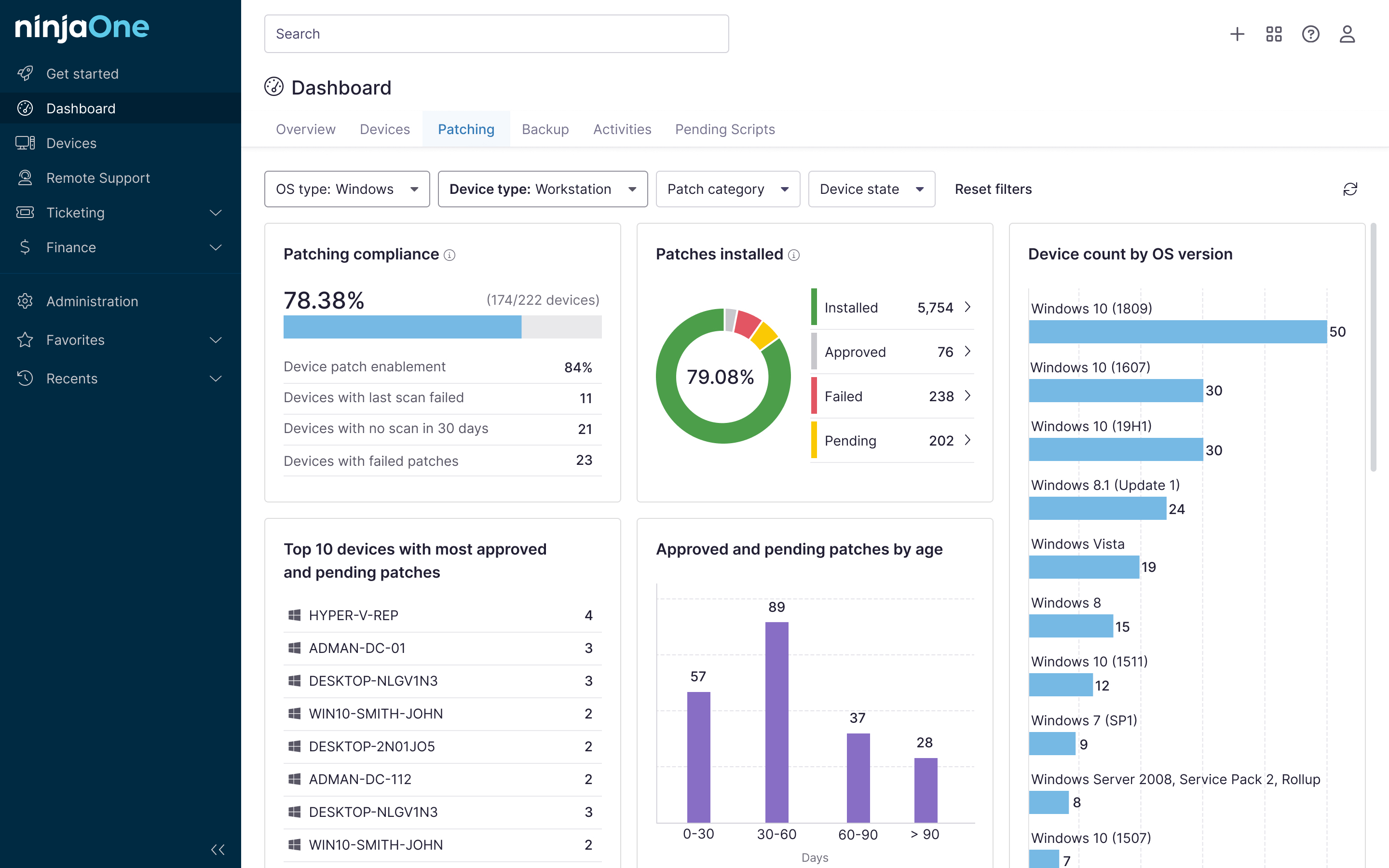
NinjaOne offers several ways to manage Windows version updates
1. Patch Management Options:
In NinjaOne, you can find approval settings for “Feature Updates“.
You can choose to:
- Reject: Block the patch from installing
- Approve: Push the patch to managed machines
- Manual: Choose whether to reject or approve when found
2. Patch Uninstallation:
- NinjaOne allows uninstalling Windows patches that support rollback
- You can uninstall patches from the Installed patch list
- There’s a column indicating whether a patch supports uninstalls
Get flexible recovery options by mastering how to extend the rollback period for previous Windows versions
Extending the rollback period for previous Windows versions gives you greater flexibility in system recovery. It ensures you have enough time to recover an earlier Windows version instead of being confined to the default 10-day window.
Using tools like Command Prompt, PowerShell, and the Registry Editor, you can easily extend the rollback timeframe to a maximum of 60 days. Just remember that you need to make this adjustment before your computer automatically deletes the Windows.old folder.
Related topics: